Leveling casters — top plate series.
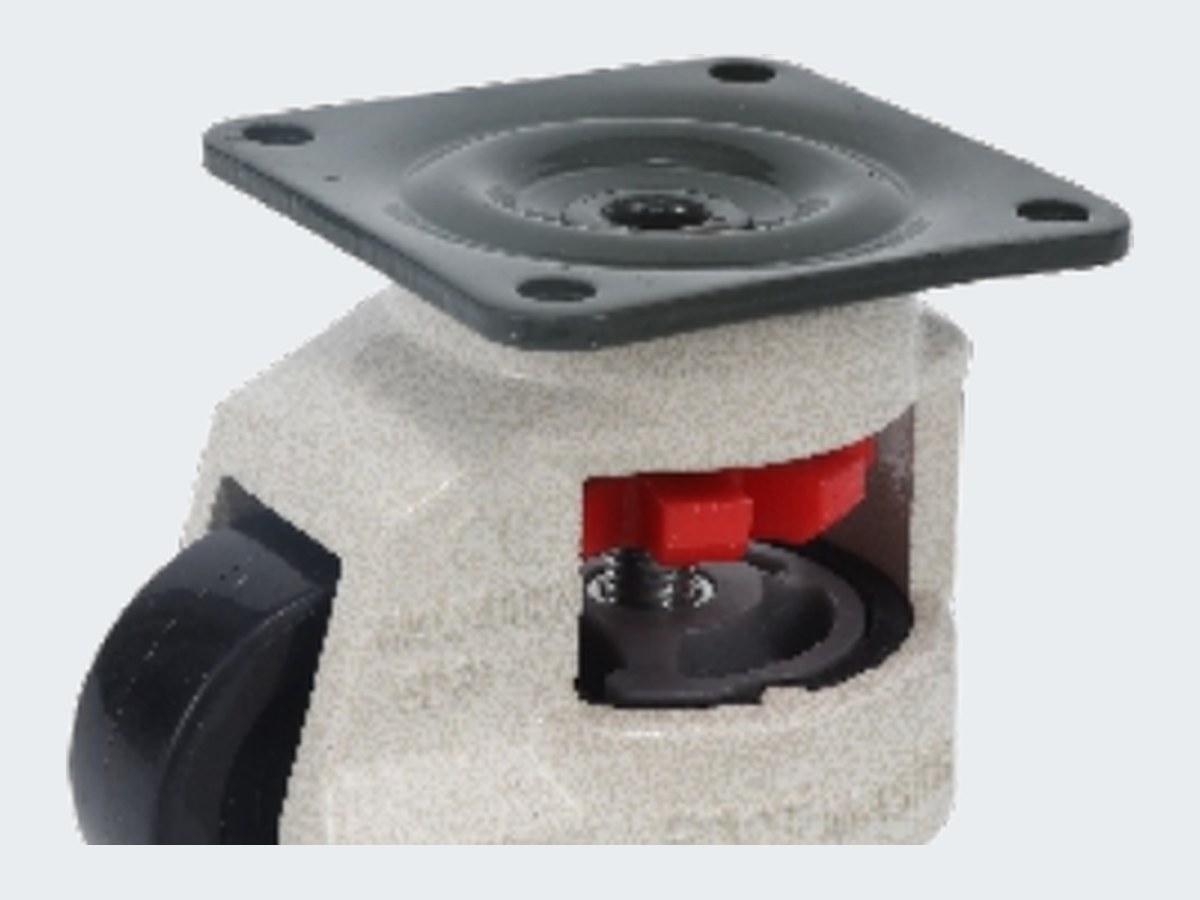
The core leveling caster series: a nylon wheel for moving the machine, an internal gear that winds the pad down, and a top plate that bolts to the equipment foot. Seven size classes cover 50 to 1,500 kg per unit in the levelled state.
Specification
| Series | Leveling casters — top plate mounting |
|---|---|
| Size classes | 40 / 40T / 60 / 80 / 100 / 120 / 150 |
| Load basis | Per unit in the levelled state; set-of-four values in the size table |
| Wheel | Nylon (PA) wheel, 42–95 mm diameter |
| Adjustment | Internal gear, turned on the housing |
| Mounting | Top plate — pattern per size class in the table |
| Documentation | CE / RoHS documentation available on request — ask in the RFQ and the documents for this series accompany the quotation. |
| MOQ | Confirmed per order in the written quotation |
| Lead time | Confirmed per order in the written quotation |
Values marked as a class or target are the specification this model is quoted and sampled against. Final confirmed values are stated on the written quotation and verified on the production sample before bulk production.
A leveling caster does two jobs in one footprint: it rolls the equipment into position, then the adjustment gear drives the pad down until the wheel is unloaded and the machine stands on the pad — levelled, damped and unable to creep. This top plate series is the standard build for machinery feet, heavy workstations, test rigs and production equipment that moves occasionally and works in one place.
The table below is the whole series as specified: plate size, hole spacing and hole diameter are stated per class, because a leveling caster that does not match the machine's existing drilling is a return, not a saving. Capacity is read per unit in the levelled state. The quotation locks the class, the plate pattern and the pad specification before a sample is produced.
Sizes in this series
| Size class | Set of 4 load | Per unit load | Top plate | Hole spacing | Hole Ø | Levelled height | Wheel Ø × width |
|---|---|---|---|---|---|---|---|
| 40 | 100 kg | 50 kg | 55 × 55 | 42 × 42 | 6.5 | 71 + 10 | 42 × 20 |
| 40T | 100 kg | 50 kg | 63 × 63 | 49 × 49 | 6.5 | 71 + 10 | 42 × 20 |
| 60 | 500 kg | 250 kg | 73 × 73 | 58 × 58 | 7 | 82 + 10 | 50 × 25 |
| 80 | 1,000 kg | 500 kg | 90 × 90 | 70 × 70 | 9 | 102 + 15 | 63 × 28 |
| 100 | 1,500 kg | 750 kg | 95 × 95 | 70 × 70 | 11 | 120 + 12 | 75 × 30 |
| 120 | 2,000 kg | 1,000 kg | 95 × 95 | 70 × 70 | 11 | 120 + 12 | 75 × 30 |
| 150 | 3,000 kg | 1,500 kg | 100 × 100 | 70 × 70 | 13 | 132 + 15 | 95 × 55 |
Height is stated as nominal height + adjustment travel, as printed in the series table. Read capacity per unit in the levelled state; the set-of-four figure assumes an evenly loaded machine on a flat floor. Dimensions in millimetres unless shown otherwise. Values are the series table values; the written quotation confirms the final drawing for your size class before sampling.
Configuration options
- Threaded stem build of the same classes — see the stem series.
- Blue nylon wheel build for a softer, quieter roll — see the blue wheel series.
- Ratchet-handle build for fast, tool-free levelling — see the ratchet handle series.
- Replacement pads and stems reorderable against your locked specification.
What the sample verifies
Before bulk production, the production sample of this series is checked against the locked specification: wheel diameter and — critically — wheel width measured, tread hardness verified where the series states it, bearing type confirmed, fork and plate dimensions measured, and load performance tested per the stated convention (EN 12532 / ANSI ICWM). The approved sample becomes the reference for the shipment, and the order carries batch traceability back to it.
Request pricing for this series
About this series
How should I read the load figures?
Per unit, in the levelled state — that is the working condition the rating describes. The set-of-four figure is the evenly loaded total across four units. For uneven floors, size from the per-unit figure with margin, the same divide-down discipline as any caster line.
Which class fits my machine?
Divide the machine's loaded weight by three, then pick the first class whose per-unit rating clears that figure with margin. Send the machine weight and footprint in the RFQ and we will state the class in the quotation.
Does the pad damage finished floors?
The pad is the static contact point once levelled — it spreads the load over its full face instead of a wheel contact patch. For delicate floors, state the floor type in the RFQ so the pad specification is quoted accordingly.
Need this caster under your own brand?
Private label, custom packaging and carton marks are available across the range — mention it in the RFQ and the quotation will include the branding steps.